Why Every Trucking Company Needs a Drug & Alcohol Program
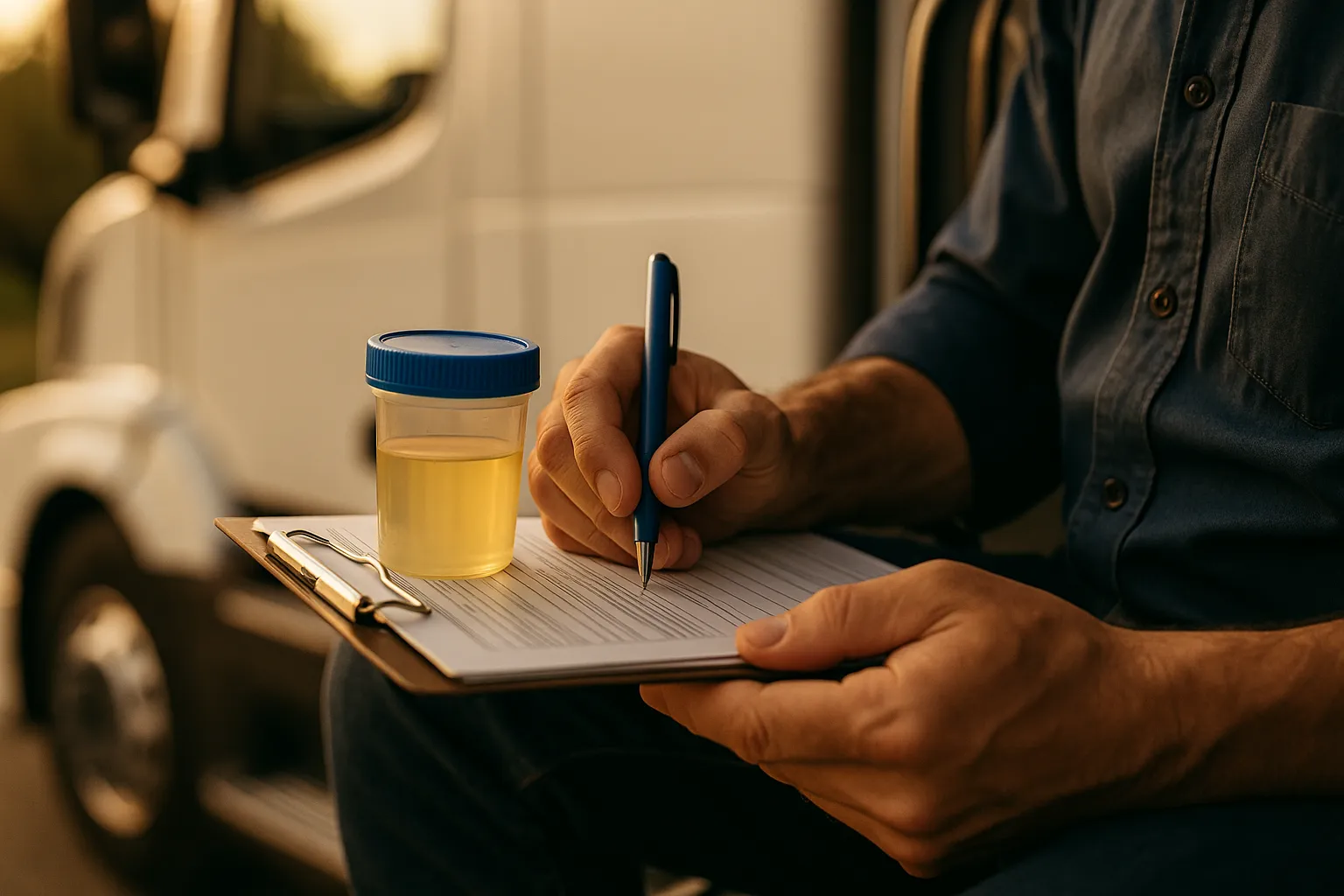
The Federal Motor Carrier Safety Administration (FMCSA) requires every employer of commercial motor vehicle (CMV) drivers who hold a Commercial Driver's License (CDL) to implement and maintain a comprehensive drug and alcohol testing program. This is not optional — it is a federal mandate under 49 CFR Part 382, and violations carry some of the heaviest penalties in the trucking industry.
The purpose of the program is straightforward: to keep impaired drivers off the road and protect public safety. Every year, thousands of serious accidents involve commercial vehicles, and the FMCSA takes a zero-tolerance approach to substance abuse among CDL holders.
For owner-operators, this means you must have a drug and alcohol program in place even if you are the only driver in your company. For fleet operators, the program must cover every CDL-holding driver on your roster. Failure to comply can result in fines up to $16,000 per violation, revocation of your MC authority, and criminal penalties in extreme cases.
TruckerNavi Drug & Alcohol Program — $150/year: Includes consortium membership, random testing, pre-employment testing, Clearinghouse compliance, and access to 30,000+ testing locations nationwide. Enroll now
Who Is Required to Be Tested?
The FMCSA drug and alcohol testing requirements apply to all "safety-sensitive" employees — specifically, anyone who operates a commercial motor vehicle that requires a CDL. This includes:
- Owner-operators — even if you are the sole employee of your company, you must be enrolled in a testing program
- Company drivers — every CDL holder employed by your trucking company
- Leased operators — drivers leased to your operation must be covered under your program or their own employer's program
- Applicants — anyone you intend to hire as a CDL driver must pass a pre-employment drug test before performing safety-sensitive functions
The requirement kicks in when the vehicle has a gross vehicle weight rating (GVWR) or gross combination weight rating (GCWR) of 26,001 pounds or more, or is designed to transport 16 or more passengers (including the driver), or transports hazardous materials requiring placards.
Types of DOT Drug and Alcohol Tests
1. Pre-Employment Testing
Before a driver can perform any safety-sensitive function (driving a CMV), they must pass a drug test. This is mandatory — no exceptions. The employer must receive a verified negative result before the driver gets behind the wheel. Pre-employment alcohol testing is permitted but not required by FMCSA.
2. Random Testing
This is the backbone of the DOT testing program. Each year, the FMCSA requires that a minimum percentage of your driver pool be randomly selected for testing:
- Drug testing: At least 50% of the average number of driver positions must be tested annually
- Alcohol testing: At least 10% of the average number of driver positions must be tested annually
Random selections must be made using a scientifically valid method (typically a computer-generated random number system) and must be spread reasonably throughout the year. When a driver is selected, they must report to the testing site promptly — generally within a few hours of notification.
3. Post-Accident Testing
After certain types of accidents, the driver must be tested for drugs and alcohol. Post-accident testing is required when:
- A fatality occurs (testing is always required regardless of fault)
- The driver receives a citation AND there is bodily injury requiring medical treatment away from the scene
- The driver receives a citation AND a vehicle is towed from the scene due to disabling damage
Alcohol testing must be conducted within 8 hours of the accident. Drug testing must be conducted within 32 hours. If these windows are missed, the employer must document why testing was not performed.
4. Reasonable Suspicion Testing
When a trained supervisor observes specific, articulable signs that a driver may be under the influence of drugs or alcohol, the driver must be tested. Signs include slurred speech, bloodshot eyes, erratic behavior, the smell of alcohol, or impaired motor functions. The supervisor must have completed reasonable suspicion training (at least 60 minutes on drugs and 60 minutes on alcohol).
5. Return-to-Duty Testing
If a driver has violated the drug and alcohol policy and has been evaluated by a Substance Abuse Professional (SAP), they must pass a return-to-duty test before resuming safety-sensitive duties. This test must produce a verified negative drug result and/or an alcohol result below 0.02 BAC.
6. Follow-Up Testing
After returning to duty, the driver must undergo a minimum of six follow-up tests during the first 12 months. The SAP can require additional tests for up to 60 months. Follow-up tests are unannounced and in addition to any random testing.
What Does the DOT Drug Test Screen For?
The DOT drug test is a standardized 5-panel urine test. It screens for the following substances:
| Panel | Substances Detected |
|---|---|
| 1. Marijuana | THC (tetrahydrocannabinol) and metabolites |
| 2. Cocaine | Cocaine and metabolites (benzoylecgonine) |
| 3. Amphetamines | Amphetamine, methamphetamine, MDMA, MDA |
| 4. Opioids | Codeine, morphine, heroin (6-AM), hydrocodone, hydromorphone, oxycodone, oxymorphone |
| 5. Phencyclidine | PCP |
Important note on marijuana: Even in states where marijuana is legal for recreational or medical use, a positive THC result on a DOT drug test is a violation. Federal law governs CDL drivers: recreational marijuana remains a Schedule I substance, and marijuana under a state medical marijuana license, moved to Schedule III on April 28, 2026, is still not a legitimate medical explanation on a DOT test. There are no exceptions, even with a state-issued medical marijuana card.
What Is a Drug & Alcohol Consortium?
A consortium is a pool of companies that group their drivers together to meet the FMCSA's random testing requirements. Instead of managing random selections, scheduling tests, and maintaining records on your own, the consortium handles everything.
For owner-operators and small fleets, a consortium is the most practical way to comply with DOT testing regulations. Here is why:
- Random pool compliance: With only one or two drivers, meeting the 50% drug and 10% alcohol random testing rates would mean testing yourself every year or two. A consortium pools hundreds or thousands of drivers, making the random selection process statistically valid and manageable.
- Record keeping: The consortium maintains all testing records, which is exactly what a DOT auditor will ask to see.
- Scheduling: When a random selection hits your driver, the consortium coordinates the test with a local collection site.
- MRO services: A Medical Review Officer (MRO) reviews all test results — this is required by DOT regulations and is included in consortium membership.
Supervisor Training Requirements
FMCSA requires that anyone who supervises CDL drivers must complete reasonable suspicion training before they can direct a driver to be tested based on observed behavior. The training must include:
- At least 60 minutes on the signs and symptoms of drug use
- At least 60 minutes on the signs and symptoms of alcohol misuse
For owner-operators who are both the employer and the driver, this training is still technically required. In practice, many consortiums provide this training as part of their enrollment package.
Written Drug & Alcohol Policy
Every employer covered by 49 CFR Part 382 must have a written drug and alcohol policy. This policy must be distributed to every driver before they perform safety-sensitive functions. The policy must include:
- The identity of the person designated to answer questions about the policy
- The categories of drivers subject to testing
- A description of prohibited conduct
- The circumstances under which testing is required
- The procedures for testing and protecting employee privacy
- The consequences of violating the policy
- Information about the effects of drugs and alcohol on health and safety
Each driver must sign an acknowledgment confirming they have received and read the policy. This signed receipt must be kept in the driver's file.
Penalties for Non-Compliance
The FMCSA takes drug and alcohol program violations extremely seriously. Penalties include:
- No D&A program at all: Fines up to $16,000 per violation per day
- Missing pre-employment test: Up to $16,000 per instance
- No random testing program: Up to $16,000
- Using a driver with a positive test result: Up to $16,000
- Not registered in Clearinghouse: Up to $16,000
- Falsifying test results: Criminal penalties, authority revocation
During a DOT audit, the drug and alcohol program is one of the first things inspectors review. It is consistently among the top violations found during compliance reviews.
TruckerNavi Drug & Alcohol Program
TruckerNavi offers a complete, turnkey Drug & Alcohol Program designed specifically for owner-operators and small fleets. For $150 per year, you get:
- Consortium enrollment and random testing pool membership
- Random drug and alcohol testing at required federal rates
- Pre-employment drug testing coordination
- Access to over 30,000 testing locations nationwide
- Medical Review Officer (MRO) review of all test results
- Written drug and alcohol policy template
- Supervisor reasonable suspicion training
- Record keeping and documentation for DOT audits
- FMCSA Clearinghouse compliance support
Frequently Asked Questions
Real-World Case Studies: FMCSA Drug & Alcohol Program Outcomes
Case 1: Anna Kuznetsova, Sunny Isles 33160 — CBD Oil Positive THC = 7-Month RTD
Profile: Anna, 38, humanitarian parolee owner-operator. 2019 Volvo VNL 760. Miami-Atlanta produce runs. USDOT 4,127,884. No prior drug/alcohol violations.
December 2025: Anna's right shoulder developed chronic pain (from repeated lifting palletized produce). Recommended by friend, bought over-the-counter CBD oil at Aventura health store 33180 (FL legal product per 7 U.S.C. §1639o, federal Farm Bill, 0.3% THC max). Used 3 drops sublingually nightly for 14 days.
January 14, 2026: Anna's consortium (TruckerNavi $150/year) randomly selected her for random drug test per 49 CFR §382.305. Reported to LabCorp Aventura at 1:18 PM. Provided sample, signed chain-of-custody.
January 21, 2026: Result returned positive for THC at 64 ng/mL (DOT cutoff per 49 CFR §40.87(a) is 50 ng/mL for confirmation). Anna immediately removed from safety-sensitive duties per 49 CFR §382.211. Form FMCSA Clearinghouse automatic notification.
Anna hired Russian-speaking SAP at Aventura Recovery Center 33180 ($640 initial evaluation per 49 CFR §40.281). SAP diagnosed "subclinical THC exposure via legal CBD product"; recommended educational program (NOT residential treatment). 4-week program $2,400.
RTD test (observed) March 22, 2026: negative. SAP final report filed to Clearinghouse. Follow-up testing schedule: 6 unannounced tests over 12 months ($50 each = $300).
Outcome: $640 SAP + $2,400 program + $90 RTD test + $300 follow-up testing = $3,430 SAP costs. Plus 7 months unemployed × $11,400 average monthly net = $79,800 lost income. Total damage: $83,230 for a legal $32 CBD bottle.
Lesson: CBD products legally sold in FL/NJ/NY/CA contain THC up to 0.3% — sufficient to trigger DOT 5-panel positive. NEVER use CBD products as a CDL holder, even with "0.0% THC" label (not federally certified). TruckerNavi Drug & Alcohol program ($150/year) provides Russian-language education on this critical pitfall.
Case 2: Igor Lebedev, Rego Park 11374 — Skipped Pre-Employment Query = $14,600 Penalty
Profile: Igor, 41, small fleet owner since 2019. 3 trucks (2 Peterbilt 579 + 1 Volvo VNL 740). Hired new driver Ivan Smirnov November 2025 without Clearinghouse pre-employment query.
Igor's mistake: trusted Ivan's CDL printout and clean MVR. Did NOT run pre-employment query at clearinghouse.fmcsa.dot.gov per 49 CFR §382.701(a). Ivan started safety-sensitive duties November 18, 2025. Cost saved: $1.25 query fee.
January 22, 2026: FMCSA Compliance Investigator arrived for unannounced audit at Igor's Rego Park yard. Reviewed records. Found: Ivan's hire date November 18; Clearinghouse query for Ivan: NONE. Retroactive query revealed Ivan had unresolved 2024 positive marijuana test in TN — Ivan in "Prohibited" status since.
Violation: §382.701(a) failure to query Clearinghouse pre-employment. Federal penalty: $9,400 (FMCSA 2026 schedule). CSA Controlled Substances/Alcohol BASIC severity weight +10. Carrier rating: Conditional pending corrective plan.
Ivan immediately removed from safety-sensitive duties per §382.211. Igor's truck #2 parked while replacement driver hired. 14 days dispatch gap × $260/day net × 1 truck = $3,640 + $1,560 lost broker bond posted on missed delivery = $5,200 indirect.
Igor hired Russian-speaking transportation attorney in Forest Hills 11375 ($3,200 retainer). Negotiated penalty reduction to $9,400 (no further mitigation). Corrective plan: subscribe to Clearinghouse query service ($300/year for unlimited queries via DriverFacts), implement monthly compliance audit ($180/month TruckerNavi Safety Compliance Старт plan).
Outcome: $9,400 federal penalty + $3,200 attorney + $5,200 lost revenue + $300 Clearinghouse subscription + $2,160 12-month Safety Compliance = $20,260 first-year damage for a $1.25 saved query.
Lesson: ALWAYS run Clearinghouse pre-employment query per §382.701 BEFORE allowing new driver to operate CMV. Cost $1.25 saves $20,000+. TruckerNavi Safety Compliance plans include unlimited Clearinghouse queries.
Case 3: Marina Vasilieva, Howell NJ 07731 — Random Alcohol Test 0.06 BAC = 30-Day RTD
Profile: Marina, 35, female owner-operator since 2022. 2020 Freightliner Cascadia. Bukharian Jewish community in Howell. No prior violations. Hauls dry van NJ-FL.
November 5, 2025: Marina attended Shabbat dinner Friday evening at Lakewood NJ. Had 2 glasses of wine with dinner (per Bukharian custom, kosher wine). Returned home 11:30 PM, slept 9 hours.
Next morning Saturday November 6, 2025, 8:18 AM: Started morning dispatch in Howell. 8:42 AM: TruckerNavi consortium random selection notification per 49 CFR §382.305. Reported to LabCorp Edison 08817 at 9:30 AM (90 minutes after wake-up).
Random alcohol breath test (Saliva Alcohol Screening Test confirmed by Evidential Breath Test) per 49 CFR §40.225: BAC 0.06 (DOT threshold 0.04 confirmed positive per 49 CFR §382.201). Marina astonished — 12 hours after last wine consumption.
Reality: Marina's small body mass (5'2", 118 lbs) processes alcohol slower than expected. Wine consumption with high-fat dinner delays elimination. 2 glasses (8 oz × 12% ABV = ~2.4 oz alcohol) × 0.015%/hr elimination = full clearance not expected until 16 hours.
SAP at Edison Family Health (Russian-speaking, $620 initial). Diagnosis: "incident-based alcohol misuse, not chronic." 30-day intensive outpatient program (IOP) prescribed. Marina attended 3 group sessions/week × 4 weeks = 12 sessions × $200 = $2,400. SAP final report December 6, 2025.
RTD breath test December 8, 2025: 0.00 BAC. Follow-up: 6 random tests over 12 months ($60 each = $360). Marina returned to dispatch December 9, 2025.
Outcome: $620 SAP + $2,400 program + $90 RTD + $360 follow-up = $3,470 SAP costs. Plus 33 days unemployed × $390/day net = $12,870 lost revenue. Total damage: $16,340 for 2 glasses of wine 12 hours pre-shift.
Lesson: DOT alcohol rule per §382.201 — no alcohol within 4 hours of duty. But practical safety: 12+ hours abstinence for women under 130 lbs or after high-volume meals. Use breathalyzer app (e.g., BACtrack) before morning shift. NEVER assume "morning after" is safe.
Legal Foundations and Statute Citations
Federal Authority
- 49 CFR Part 382 — Controlled Substances and Alcohol Use and Testing. §382.201 (alcohol prohibitions), §382.211 (removal from safety-sensitive duties), §382.305 (random testing 50% drug + 10% alcohol minimum), §382.701 (Clearinghouse query requirements).
- 49 CFR Part 40 — Procedures for Transportation Workplace Drug and Alcohol Testing Programs. §40.87 (drug cutoffs), §40.225 (breath alcohol confirmation), §40.281 (SAP qualifications), §40.305 (RTD process).
- 7 U.S.C. §1639o (2018 Farm Bill) — Hemp definition: cannabis with ≤0.3% delta-9 THC. Federal legality of hemp products. DOT regulation supersedes — any THC detection above 50 ng/mL = positive regardless of source.
- FMCSA Drug & Alcohol Clearinghouse — Federal database tracking positive test results, refusals, RTD process completion. Queries required pre-employment and annually.
- DOT Office of Drug and Alcohol Policy and Compliance (ODAPC) — Regulatory guidance and clarifications on testing procedures.
FMCSA Drug & Alcohol Compliance Cost Comparison
| Service | Annual Cost (Owner-Op) | Annual Cost (5-truck fleet) | Annual Cost (20-truck fleet) | What's Included |
|---|---|---|---|---|
| TruckerNavi Drug & Alcohol Consortium | $150 | $650 | $2,200 | Random pool, Clearinghouse queries (limited), 30K+ collection sites |
| Standard non-Russian-speaking consortium | $120-$180 | $580-$880 | $1,800-$2,800 | Random pool only, English-only support |
| FMCSA Clearinghouse subscription (DriverFacts) | $300 | $1,200 | $3,600 | Unlimited pre-employment & annual queries |
| SAP Evaluation (one-time, post-violation) | $580-$680 | same per driver | same per driver | Initial assessment + treatment recommendation |
| RTD Test (one-time, post-treatment) | $90-$120 | same per driver | same per driver | Observed urine collection |
| Follow-up Testing (per test, 6-72 over 1-5 years) | $50-$60 each | same per driver | same per driver | Unannounced random schedule |
| Russian-speaking SAP (NJ/NY/FL) | $580-$680 initial | same per driver | same per driver | Russian-language counseling |
TruckerNavi Drug & Alcohol Program ($150/year, included in all Safety Compliance plans) provides Russian-language education on CBD pitfalls, alcohol timing rules, and full Clearinghouse query management. Call (315) 871-0833 or WhatsApp (929) 347-4410.