Bottom line up front: in June 2001 a gallon of diesel averaged $1.37 across the US; for the week ending August 24, 2026 it was $5.652 (EIA data). A full 250-gallon fill went from ~$343 to ~$1,413. Over the same 25 years, the pencil-and-grid paper logbook turned into an ELD (mandated December 18, 2017), the fax machine to FMCSA turned into the online Motus system, and the CB radio turned into a smartphone full of load boards. One thing did not move: the federal insurance minimum of $750,000 (49 CFR §387.9), frozen since the 1980s. Below: a retrospective with real numbers, era polaroids, and a calculator for your first year behind the wheel.

2001: a pencil, an atlas, and diesel at $1.37
Picture a driver leaving New Jersey for Chicago in the summer of 2001. On the passenger seat: a Rand McNally atlas with dog-eared corners. On the dash: a CB radio. In the binder: a paper logbook with the hours grid drawn in pencil (and, let's be honest, sometimes "adjusted" in a parking lot before the scales). Dispatch reaches him through a pager and a truck-stop payphone. Diesel is $1.37 a gallon (US average, June 2001, Department of Energy data). A full tank runs about three hundred dollars, and that felt normal.
Today the same run looks different: an app builds the route around weigh stations and low bridges, the ELD counts your hours by itself, the load is found on a board in a minute, and filling those same 250 gallons hits the card for $1,400+. Whether there is less romance or more is debatable. The numbers are not.
Diesel over 26 years: one line that explains the industry
US average retail diesel price, dollars per gallon. Points are AFDC/DOE data (usually April or July of each year) and EIA for 2026:
Three storylines on one line: the 2008-2009 collapse (from $4.22 to $2.19 in half a year), the "golden fill-up" of 2016 ($1.99: many veterans still remember it as the best fuel year of their careers), and the double punch of 2022-2026, where the August 2026 weekly average of $5.652 topped both historical peaks.
🧮 Calculator: what year did you start driving?
Then and now: what changed, and what froze
| Early 2000s | 2026 | |
|---|---|---|
| Diesel (US average) | $1.19–1.55 (2002–2004, AFDC) | $5.652 (EIA, 08/24/2026) |
| Hours of service | Paper logbook, pencil | ELD, mandated 12/18/2017 |
| The fuel itself | Up to 500 ppm sulfur | ULSD only, ≤15 ppm (EPA, since 12/01/2010) |
| Communication | CB radio, pager, payphone | Smartphone, messengers, telematics |
| Finding freight | Calling brokers, bulletin boards at truck stops | Load boards on your phone |
| Starting a company | Forms by mail and fax, weeks of waiting | FMCSA Motus online; MC $300, BOC-3 $35 |
| Minimum BIPD insurance | $750,000 (49 CFR §387.9) | Same $750,000; brokers de facto ask for $1M |
Polaroids of an era
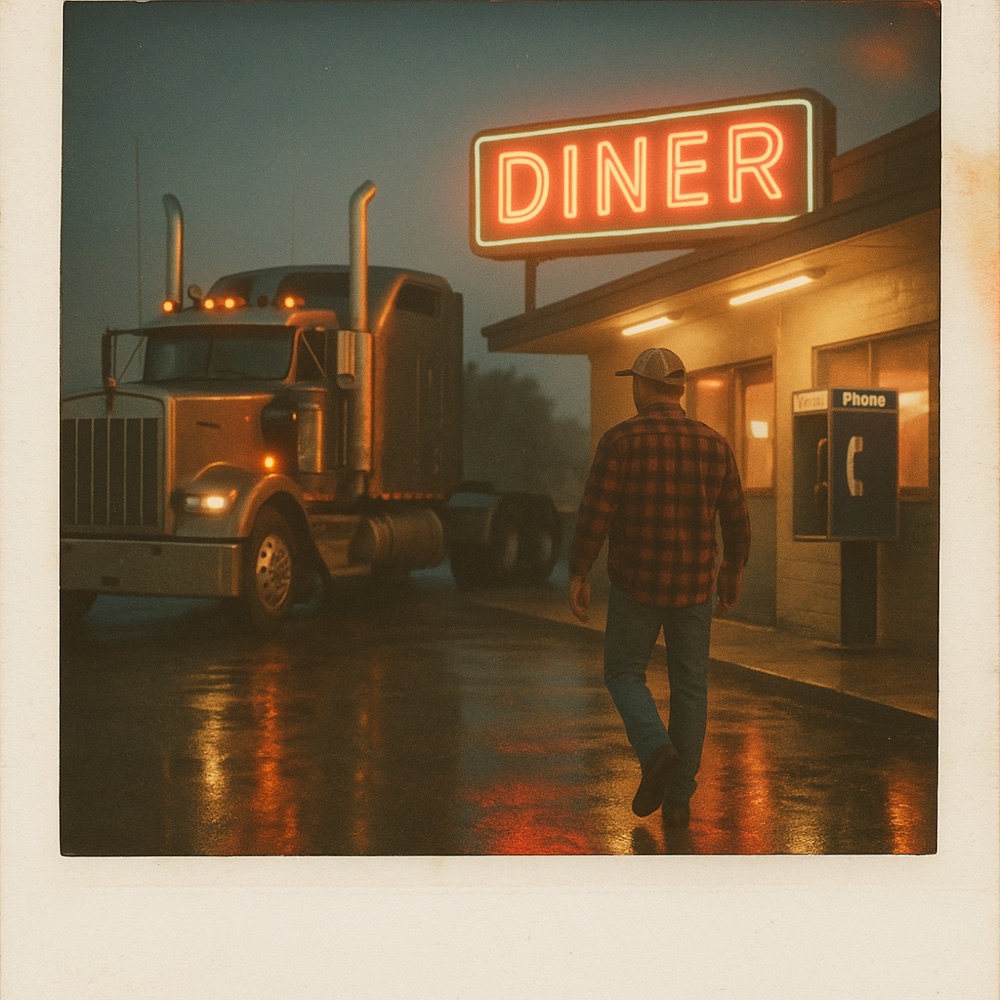
Veterans tell the same story almost word for word: truck stops were smaller and friendlier. Showers were basic, but the line moved to the sound of real people talking, not feed-scrolling. Diner food cost about as much as a couple gallons of diesel, coffee refills were free, and the waitress remembered your order from a run a month back. The phone booths by the entrance were the era's "messenger app": the evening line for them looked like today's line for a free loyalty-points shower.
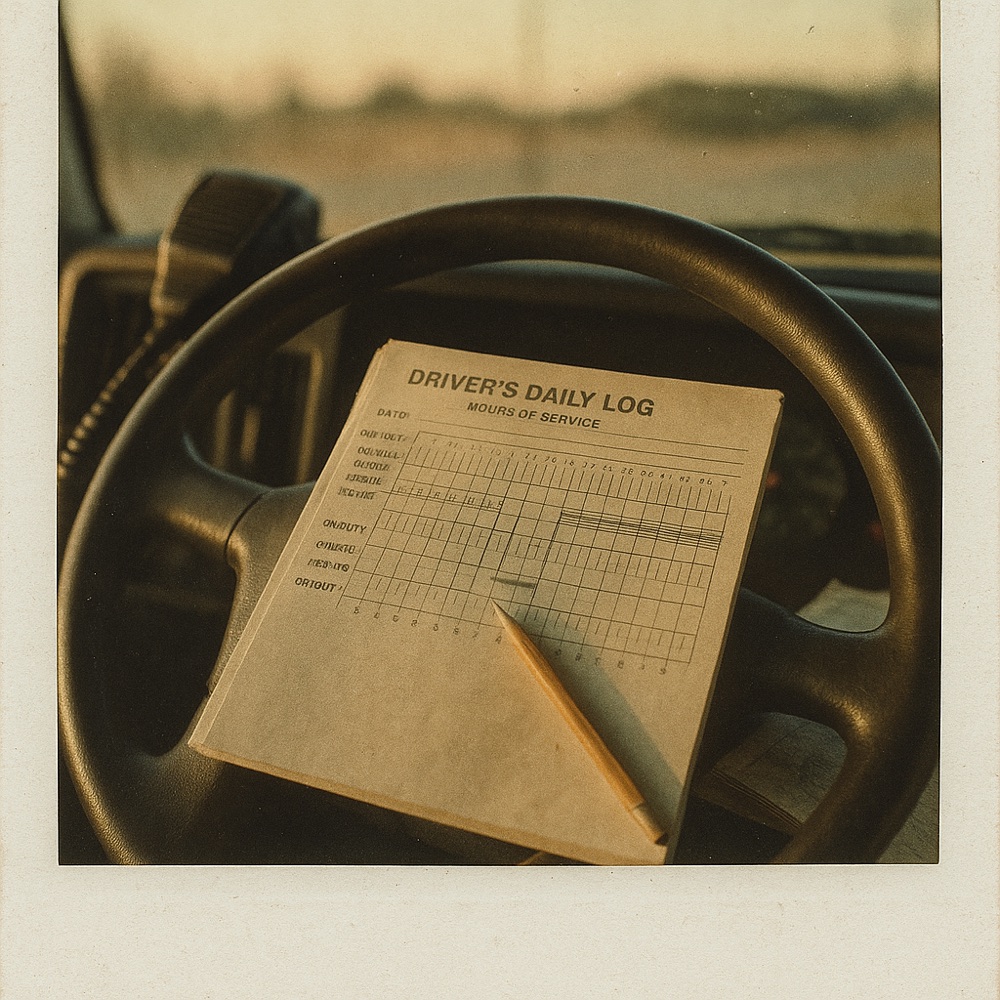
The paper logbook is its own religion. The hours grid, the eraser, and for the brave, a second "clean" book. On December 18, 2017, FMCSA closed that era with the ELD mandate (old AOBRDs survived until December 16, 2019). You can argue forever about whether things got better, but the fact stands: today the hours write themselves, and you cannot "touch them up" anymore: you can only plan the run with your head.

What this means for you in 2026
- Fuel is the biggest bill in your business. At $5.65 a gallon, the difference between a 6 mpg truck and a 7.5 mpg truck is tens of thousands of dollars a year. Know your cost per mile before signing any rate, and file IFTA on time: in our Safety Compliance plans, quarterly IFTA and the annual Form 2290 are included at no extra charge.
- Regulation tightens; it does not roll back. ELD, Clearinghouse, Motus: every few years a new system appears, and not knowing it costs fines and downtime. If your USDOT account is frozen at the Motus linking step, we know how to open those cases with FMCSA.
- The insurance minimum has not been indexed since the 1980s, but payouts have grown. A $750,000-$1,000,000 policy today is not "a paper for the broker": it is the only thing standing between an accident and the owner's personal bankruptcy.
- The cost of entry stayed accessible. FMCSA federal fees: $300 for the MC, $35 for BOC-3, $46 UCR (0-2 trucks, 2026 rate). TruckerNavi opens your company turnkey for $499: LLC, EIN, USDOT, MC, BOC-3, UCR, Clearinghouse. About 3 weeks after the insurance filing, the MC goes active.
For 25 years the road has kept changing, but the job is the same: drive and earn. We cannot bring back the paper era, but we will take the paperwork off your hands: company formation, Safety Compliance from $99/mo, IFTA, 2290, permits, Motus unfreezing. We speak English and Russian. (315) 871-0833 or WhatsApp.